The Science of Savings: How Low Rolling Resistance and Tire Retreading Cut Diesel Costs

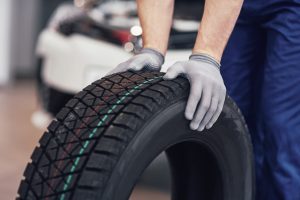
Sumber: https://www.freepik.com/free-photo/closeup-mechanic-hands-pushing-black-tire-workshop_9122523.htm
For fleet managers and logistics operators, the equation is simple but brutal: fuel costs are the single largest variable expense in running a transportation business. With diesel prices fluctuating unpredictably, finding ways to squeeze every kilometer out of a tank is not just about efficiency—it is about survival. While many look to engine aerodynamics or driver behavior to cut costs, the most overlooked solution often touches the road directly. The technology embedded in your tires, specifically regarding rolling resistance, can make or break your bottom line. This is where professional tire retreading plays a pivotal role in transforming your fleet’s operational economy without the exorbitant capital expenditure of purchasing entirely new tires.
In this deep dive, we will explore the physics of Low Rolling Resistance (LRR), the chemistry of modern rubber compounds, and how integrating high-quality retreading into your maintenance strategy can significantly reduce your diesel bills.
Understanding the “Silent Thief”: What is Rolling Resistance?
Before we can appreciate the solution, we must understand the problem. Rolling resistance is defined as the energy lost when a tire rolls over a surface. It is the force that resists the motion when a body rolls on a surface.
To put it in perspective, ignoring rolling resistance is like driving with the handbrake slightly pulled; it is a silent thief stealing money from your pocket every single mile.
The Physics of Hysteresis
The main culprit behind rolling resistance is a phenomenon called hysteresis. As a tire rotates, the section of the tire touching the road deforms (flattens) to carry the load. When the tire rotates out of the contact patch, it recovers its original shape.
However, rubber is viscoelastic. This means the energy put into deforming the tire is not fully recovered when it returns to shape. That lost energy is dissipated as heat. The engine must then burn more diesel to overcome this energy loss and keep the vehicle moving.
According to industry data from major tire manufacturers, rolling resistance accounts for approximately 30% of the fuel consumption for a heavy-duty truck driving at highway speeds. This means that nearly one-third of your fuel bill is spent just overcoming the resistance of your tires.
The Chemistry of Efficiency: Inside the LRR Compound
The magic of fuel savings happens at the molecular level. Historically, tires were made primarily of natural rubber and carbon black. While carbon black provides excellent durability and abrasion resistance, it generates significant heat due to friction between carbon particles during the deformation process mentioned above.
To combat this, modern rubber technologists—including those in the retreading sector—have developed advanced compounds.
The Role of Silica and Silane Coupling
The game-changer in LRR technology is the introduction of Silica to replace a portion of Carbon Black. Silica particles interact differently within the rubber matrix. When coupled with specific chemical agents (Silane), Silica reduces the internal friction between polymer chains.
This results in a rubber compound that runs cooler. A cooler running tire means less energy is lost to heat (lower hysteresis), which directly translates to less power required from the engine to roll the tire.
The Trade-off Myth
In the past, there was a belief that “harder” rubber rolled better but offered less grip (traction), especially in wet conditions. Today, advanced LRR compounds defy this trade-off. Through sophisticated mixing technologies, manufacturers can create a tread that is stiff enough to reduce rolling resistance but still pliable enough to grip the road surface effectively.
The Economic Argument: Retreading vs. New LRR Tires
Many fleet owners mistakenly believe that to get the benefits of Low Rolling Resistance technology, they must buy premium new tires. This is a costly misconception.
The casing of a premium truck tire is built to last for hundreds of thousands of kilometers—far longer than the original tread life. The rolling resistance is determined by two main factors:
- The Casing Construction: (Approx 40% impact)
- The Tread Rubber/Pattern: (Approx 60% impact)
By utilizing high-quality retreading services, you can apply a modern, LRR-engineered tread onto your existing casings.
Cost-Benefit Analysis
Let’s look at the numbers.
- New Premium LRR Tire: $400 – $600 (estimated).
- Premium LRR Retread: $150 – $250 (estimated).
If both the new tire and the retread offer similar fuel efficiency savings (which testing shows they do, provided the retread uses premium LRR rubber), the return on investment (ROI) for the retread is significantly higher. You are achieving the same fuel economy for half the initial asset cost.
Quantifying the Savings: How Much Diesel Can You Save?
It is essential to move beyond theory and look at potential real-world savings.
According to the North American Council for Freight Efficiency, a 3% reduction in rolling resistance translates roughly to a 1% savings in fuel.
Top-tier LRR retreads can offer rolling resistance coefficients that are 10% to 15% lower than standard retreads or budget new tires.
- Math: 15% reduction in rolling resistance ≈ 5% fuel savings.
The Scenario
Imagine a fleet of 20 trucks.
- Average mileage per truck: 100,000 km/year.
- Average consumption: 3 km/liter.
- Total diesel usage: 33,333 liters per truck/year.
- 5% Saving: 1,666 liters saved per truck.
- Total Fleet Saving: 33,320 liters per year.
At current industrial diesel prices, this represents a massive injection of capital back into the business—purely by choosing the right rubber.
Beyond Fuel: The Environmental Impact (E-E-A-T)
In the modern B2B landscape, sustainability is no longer a buzzword; it is a requirement for tenders and corporate compliance.
Using LRR retreads hits a “sustainability double.”
- Reduced Carbon Emissions: By burning less diesel, your fleet emits fewer tons of CO2 into the atmosphere.
- Circular Economy: Retreading recycles the tire casing. Manufacturing a new truck tire requires approximately 22 gallons of oil; retreading requires only about 7 gallons.
By adopting this strategy, your company demonstrates Environmental, Social, and Governance (ESG) responsibility, which can be a deciding factor in winning contracts with multinational clients.
Maintenance: The Key to Sustaining LRR Benefits
Investing in LRR retreads is only step one. To ensure the rubber performs as engineered, maintenance is non-negotiable.
1. Inflation Pressure is Critical
Under-inflation is the enemy of fuel economy. If a tire is under-inflated by just 10 psi, rolling resistance increases dramatically because the sidewalls flex more, generating excessive heat. This negates the chemical advantages of the LRR compound.
- Tip: Implement a daily pressure check protocol or utilize Tire Pressure Monitoring Systems (TPMS).
2. Wheel Alignment
If your wheels are not aligned, the tires are essentially being “dragged” sideways as they roll forward. This scrubbing action not only destroys the tread quickly but significantly increases the force required to move the vehicle.
Conclusion
The path to profitability in the logistics and transport industry requires a granular approach to cost management. Fuel is your biggest expense, and your tires are the biggest influencer of that expense that you can control. By shifting perspective and viewing tires not as consumables but as technological assets, you can leverage the science of Low Rolling Resistance.
Combining this technology with the economic benefits of retreading allows you to maximize the lifecycle of your casings while minimizing your monthly diesel bill. It is a strategy that protects your margins and the environment simultaneously.
If you are ready to optimize your fleet’s performance with high-quality, fuel-efficient rubber compounds and expert retreading services, do not let your profits burn away on the highway. We are here to help you engineer a more efficient future.
For a consultation on how to implement a cost-saving tire strategy for your fleet, contact Rubberman today.